
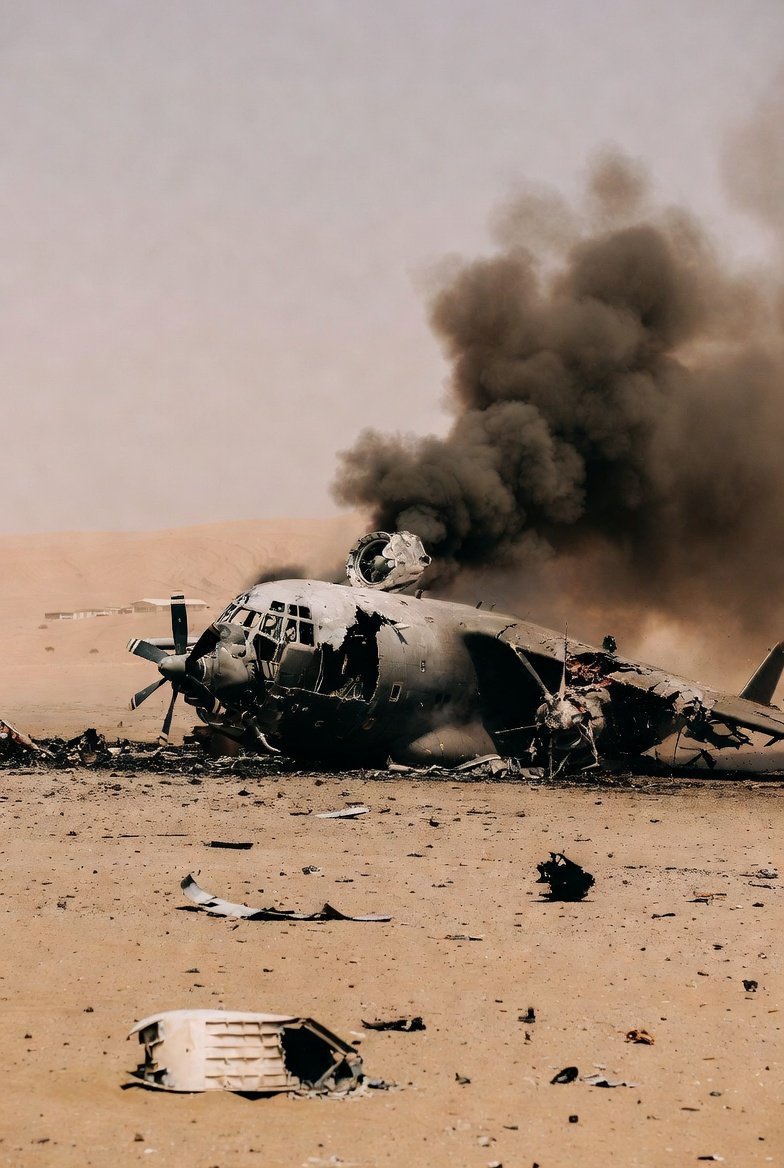
Tragic Loss: All Six Crew Members Killed in US Refueling Military Plane Crash in Iraq
A devastating accident claimed the lives of six US service members after a military refueling aircraft crashed in western Iraq on 12 March. The KC-135 plane went down at around 2 p.m., according to US Central Command (CENTCOM), which oversees American military operations across the Middle East.
CENTCOM confirmed that the crash was not the result of hostile or friendly fire, providing some reassurance amid initial concerns. Another aircraft involved in the mission was able to land safely, but the loss of the KC-135 has left the military community grieving.
Rescue operations are still ongoing for the two other crew members associated with the mission, as officials work tirelessly to provide answers and ensure the safety of all personnel.
The identities of the six fallen service members are being withheld for 24 hours to allow time for next-of-kin notification, a standard practice in the US military. Families, colleagues, and communities are now mourning the loss of these brave men and women who dedicated their lives to service.
CENTCOM has pledged to conduct a thorough investigation into the crash to determine the cause and prevent similar tragedies in the future. The incident serves as a somber reminder of the risks faced by service members even during routine missions far from home.
Our thoughts are with the families, friends, and fellow service members affected by this heartbreaking loss.
Initial reports from the U.S. Central Command suggested that the aircraft had encountered complications during a routine refueling operation. Eyewitness accounts indicated that a sudden failure preceded the crash, leading to the aircraft spiraling down at high speed. While the exact cause of the crash is still under investigation, preliminary findings centered on a possible mechanical failure, which is a crucial aspect to understand as we honor the sacrifices made by the crew.
As the U.S. military mourns the loss of these six servicemen and women, it is essential to remember the critical role that aircraft like the KC-135 play in supporting air operations worldwide. These Stratotankers are vital for extending the range and payload capacity of tactical fighter aircraft, enabling them to conduct missions that would otherwise be unfeasible. The crash not only highlights the operational dangers faced by military personnel but also emphasizes the significant impact that such tragedies have on their families and the wider community.
This incident serves as a point of reflection on the bravery and commitment of those who serve in the armed forces, as well as a reminder of the profound risks they face daily. As investigations continue, the memories of the crew members will remain in the hearts of many, underlining their unwavering dedication to duty even in the face of peril.
The KC-135 Aircraft: An Overview
The KC-135 Stratotanker, a military aerial refueling aircraft, has been a pivotal component of the United States Air Force (USAF) since its introduction in the late 1950s. Designed primarily to provide in-flight refueling to various types of military aircraft, the KC-135 significantly extends the operational range and flexibility of air combat and support missions. It is a jet-powered vehicle, primarily based on the Boeing 707 airframe, which enables faster refueling operations and enhanced mission effectiveness.
One of the primary specifications of the KC-135 is its ability to carry over 200,000 pounds of fuel, allowing it to refuel multiple aircraft simultaneously during missions. This feature is crucial for long-range strategic operations, where fuel efficiency and range can be determining factors in mission success. Additionally, the aircraft is equipped with advanced technology that allows it to operate in various environments and conditions, further enhancing its utility across different theaters of operation.
The significance of the KC-135 is evident in its long-standing role in multiple military conflicts and humanitarian missions. Not only has it supported combat operations during the Gulf War and the War on Terror, but it has also been utilized in various NATO operations, showcasing its adaptability and reliability. The presence of KC-135s provides a strategic advantage, improving air force capability and global reach while reinforcing the commitment of the US military to maintain air superiority.
In essence, the KC-135 Stratotanker is more than just a refueling aircraft; it symbolizes the strategic depth and operational capability of the US military. Its contributions to aerial warfare and peacekeeping missions underline the aircraft’s importance in sustaining air combat effectiveness over decades of service.
Details of the Crash
On the fateful day of the KC-135 crash in Iraq, a series of critical events unfolded that led to a heartbreaking tragedy. The incident occurred on the evening of October 5, 2020, as the aircraft was conducting a routine refueling mission. As the KC-135 approached its designated area, the weather conditions were reported as challenging, with low visibility and inclement weather affecting flight operations.
Approximately at 18:30 local time, the aircraft crew reported encountering strong turbulence. This turbulence was likely exacerbated by the presence of nearby storm systems, which created a hazardous flight environment. Information from air traffic control indicated that the crew was attempting to navigate through adverse weather conditions, focusing on maintaining altitude and ensuring safety while managing the aircraft’s performance.
As moments passed, communication with the KC-135 began to falter. The crew attempted multiple radio calls, but responses were limited, indicating that the aircraft was experiencing significant mechanical difficulties. Within a few critical minutes, radar contact was lost, raising immediate concerns from ground control and the command center regarding the safety of the crew.
In response to the loss of contact, military search and rescue units were activated. Within a short period, a series of helicopters and ground teams were dispatched to locate the aircraft and assess the situation. Tragically, nearly an hour later, the wreckage of the KC-135 was discovered in a remote area, confirming the fears of a catastrophic accident, and revealing the unfortunate loss of all six crew members aboard.
The Victims: Profiles of the Fallen Crew Members
The tragic crash of the KC-135 in Iraq has robbed us of six remarkable individuals who dedicated themselves to serving their country. Each crew member played a pivotal role in the operation of the aircraft, and together they represented the commitment and bravery of the United States Armed Forces.
The pilot, Captain James H. Rogers, was known for his exceptional skill and leadership. With over a decade of experience flying various military aircraft, his dedication to flight safety and mission success made him a natural choice for the command. Friends and family remember him as a loving husband and father who balanced his passion for aviation with a deep commitment to family.
Lieutenant Sarah M. Collins served as the co-pilot on the ill-fated flight. A promising officer with a stellar reputation, Sarah was known for her meticulous attention to detail and strong problem-solving skills. She was actively involved in mentoring younger service members, encouraging their growth and development in the field.
Technical Sergeant Robert A. Miller was the boom operator, responsible for aerial refueling missions. With years of experience under his belt, he was highly respected among his peers for his ability to stay calm under pressure. Robert was also an avid sports enthusiast, often seen engaging in friendly competition with his fellow airmen.
The loadmaster, Senior Airman Emily T. Jacobs, played a critical role in the cargo management aboard the aircraft. Her determination and work ethic earned her the respect of her supervisors. Outside of her military duties, Emily enjoyed volunteering in her community, showing a profound commitment to making a difference in the lives of others.
Staff Sergeant David R. Thompson and Airman First Class Nathan P. Evans rounded out the crew team, both displaying exceptional dedication and promise within their respective roles. They were deeply committed to their missions, always striving for excellence and embodying the military values instilled in them.
The ongoing search and rescue efforts for the two missing crew members from the recent KC-135 crash in Iraq continue to be a focal point of military operations. As teams work diligently to locate and recover the individuals, various challenges hinder progress, highlighting the complexities of conducting rescue missions in such environments. Adverse weather conditions, difficult terrain, and the remote location of the accident have all posed significant obstacles to the search teams.
Military sources have reported that search operations are being supported by both ground and aerial units, utilizing advanced technology, such as drones and surveillance aircraft, to improve visibility and search efficiency. The involvement of specialized search and rescue teams has become critical, as personnel equipped with expertise in navigating challenging landscapes are deployed to increase the chances of locating the missing crew members.
In addition to search teams, multiple branches of the military are working in collaboration with local authorities and international aid organizations. This coalition aims to maximize resources and optimize the effectiveness of rescue operations. Information from military officials has remained somewhat sporadic; however, they have assured concerned families and the public that every possible effort is being undertaken to locate the missing crew members.
Furthermore, continual assessment of the situation is conducted to adapt to evolving circumstances, ensuring that the operations remain focused and strategic. Though progress may be slow, the dedication shown by all parties involved indicates a strong commitment to finding and bringing home the missing crew members. As these efforts unfold, families anxiously await updates, holding on to hope amidst the uncertainty surrounding the rescue operations.
Official Statements and Reactions
The tragic crash of a KC-135 aircraft in Iraq, which resulted in the loss of six crew members, has elicited a range of responses from military officials, family members, and government representatives. The incident not only represents a significant loss within the military community but also impacts families and civilians linked to the crew. US Central Command swiftly released a statement expressing deep sorrow over the tragedy, emphasizing the courage and commitment of the lost servicemen. The statement highlighted the vital role that these crew members played in supporting operations in the region.
Military officials have also expressed their condolences during press conferences, illuminating the honor and sacrifice inherent in their service. Brigadier General Mark S. Becker stated, “These individuals were more than just members of our military; they were brothers, fathers, friends, and committed patriots who dedicated their lives to protecting our freedom. Their loss is felt deeply across our entire armed forces.” This sentiment was echoed in various statements released by other branches of the military, each underscoring the shared grief experienced throughout the ranks.
Family members of the deceased have voiced their reactions through various platforms, calling for support from the community and reflecting on the profound impact of their loss. One widow mentioned, “My husband exemplified what it meant to serve, and while we grieve his absence, we stand united in honoring the legacy he leaves behind.” Government representatives have echoed these sentiments, offering their sympathies and pledging continued support for bereaved families during this challenging time.
In light of the events, leaders from both military and civilian sectors are advocating for increased awareness around the risks faced by personnel serving in conflict zones. The hope is that addressing these issues will foster a deeper understanding of the sacrifices made by those in uniform. The reaction to this tragedy reinforces the idea that while the loss is profound, the values of service, duty, and sacrifice endure within the military community.
Investigating the Causes of the Crash
The investigation into the tragic KC-135 crash in Iraq focused extensively on determining the causes behind the incident that led to the loss of six crew members. Following the crash, a thorough examination was initiated by military and aviation authorities, who collaborated to ascertain the series of events leading up to the fatal accident. This multi-faceted investigation involved reviewing flight data, analyzing cockpit recordings, and examining potential mechanical failures.
Initially, there were concerns regarding potential hostile or friendly fire as contributing factors to the crash. However, investigators worked meticulously to rule out these possibilities. They gathered intelligence reports and conducted interviews with military personnel stationed in the area at the time of the incident. Through these efforts, it was concluded that there was no evidence of enemy combat engagement or accidental fire from allied forces during the critical moments of flight.
Additionally, investigators assessed environmental factors that could have influenced the KC-135’s operation. Weather conditions, which included visibility requirements and wind dynamics, were analyzed. The investigation also scrutinized the aircraft’s operational status prior to takeoff to identify any possible mechanical issues that could jeopardize flight safety. It was determined that all pre-flight checks were performed correctly, ensuring the aircraft was in suitable condition for its mission.
Ultimately, the investigation aimed not only to uncover the causes of the crash but also to honor the memory of those lost. By clarifying that the tragedy was not due to external hostilities, the findings provided some solace to the families of the crew members and emphasized the risks associated with military aviation operations. This meticulous approach reflects a commitment to safety and the importance of learning from incidents that endanger the lives of service members.
Impact on Military Operations and Support
The tragic loss of six crew members in the KC-135 crash in Iraq has profound ramifications for military operations in the region. This incident not only takes a personal toll on the families and loved ones of the deceased but also signals potential challenges to ongoing missions and support functions conducted by U.S. forces. The KC-135 Stratotanker plays a crucial role in air operations, primarily by providing refueling capabilities to various military aircraft. The loss of such a vital asset, along with the experienced personnel, could hinder air support operations and operational readiness.
Furthermore, the downturn in available personnel may lead to recalibrated deployment strategies within the air force and broader military engagements in Iraq. It places additional pressure on existing air crews to fulfill their duties, potentially stretching resources thinner than before. This impact may also necessitate shifts in supplemental support systems, impacting the effectiveness of air support in ongoing military operations.
From a strategic perspective, the repercussions of this crash can be analyzed within the context of U.S. military presence in the region. Any disruption in air support undermines the overall operational framework critical for success in current military objectives. This incident could raise questions about the resilience of U.S. commitments in Iraq and contribute to a reassessment of engagement strategies moving forward. Maintaining effective air support is indispensable for coalition forces operating in often-fragile environments, and the loss of skilled service members intensifies the challenges faced in restoring and ensuring troop and mission effectiveness.
Conclusion: Remembering the Heroes
The tragic KC-135 crash in Iraq resulted in the loss of six dedicated crew members who served their country valiantly. These individuals, each with their unique stories and backgrounds, showcased an unwavering commitment to their mission and comrades. It is crucial to honor their sacrifice, as their service exemplifies the qualities that define true heroism. The emotional impact of their loss resonates deeply within the military community and among their loved ones, highlighting the profound sense of duty and camaraderie that unites those who serve in armed forces.
As we reflect on the lives of these brave men and women, we must also recognize the importance of supporting their families during this challenging time. The family members left behind experience tremendous grief and emotional turmoil, and it is vital that they receive the care and support they deserve. Communities, organizations, and individuals are encouraged to come together, extending a helping hand to those who have lost their loved ones while honorably serving our nation.
Furthermore, remembering their stories ensures that the legacy of these heroes lives on. Whether through memorial services, community events, or personal remembrances, finding ways to celebrate their contributions and sacrifice is essential. Sharing their experiences helps educate future generations about the realities of service and the sacrifices made by military personnel. Collectively, it is our responsibility to keep their memory alive, acknowledging their courage and dedication to the freedoms we enjoy today.
In conclusion, the heroes lost in the KC-135 crash will forever be remembered for their selflessness and bravery. Let us strive to honor their memory by supporting their families and ensuring that their contributions to our nation are never forgotten. Their legacy endures in the hearts of all who recognize the true cost of freedom.