
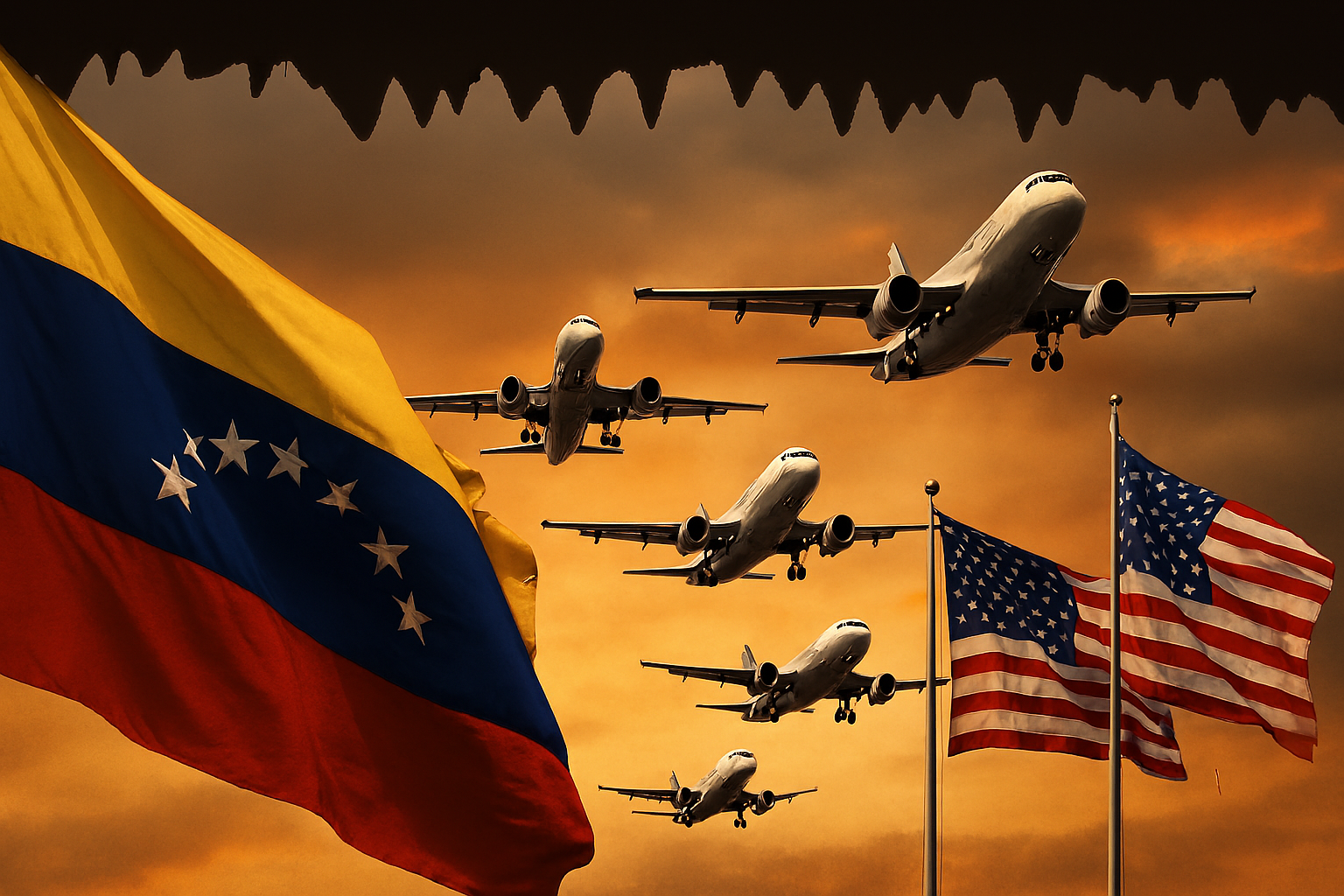
Background of the Situation
The relationship between Venezuela and the United States has been characterized by significant tension in recent years, particularly amid the backdrop of Venezuela’s profound economic and political crisis. These tensions have permeated various sectors, including international travel and aviation. The approach taken by the Venezuelan government towards airlines operating within its territory has been cautious and often reactive, reflecting broader geopolitical dynamics.
Recent events have seen the Venezuelan authorities revoke flight rights for six international airlines, a decision that can be traced back to escalating tensions. Notably, warnings issued by the U.S. Federal Aviation Administration (FAA) regarding safety concerns in Venezuelan airspace serve as a catalyst for this development. The FAA initially advised airlines to exercise heightened caution when flying in Venezuela, citing potential risks that could affect commercial aviation. Such advisories underscore the critical need for airlines to assess security measures amidst political instability that has plagued the nation.
Flight rights are not merely administrative privileges; they play a vital role in maintaining international connectivity. For a country like Venezuela, which has faced increasing isolation from the global community, the revocation of these rights restricts not only tourism but also the transportation of goods and services necessary for economic survival. The impact of limited flight operations can be felt across numerous sectors, as reduced connectivity can lead to diminished trade opportunities, lessened tourism potential, and increased difficulties in securing international partnerships.
As the political landscape in Venezuela continues to evolve, the implications of these revocations for both the airlines and the nation itself remain to be seen. The outcome will depend on the interplay between domestic developments in Venezuela and foreign policies orchestrated by the United States and other countries within the international community.
List of Affected Airlines
Recent developments in Venezuela’s aviation sector have resulted in the revocation of flight rights for six prominent international airlines. These include Iberia, TAP, Avianca, LATAM, Turkish Airlines, and Gol. Each of these airlines has played a significant role in enhancing air travel connectivity within Venezuela and internationally, providing valuable options for both leisure and business travelers.
Iberia, the Spanish airline, has a strong historical presence in Venezuela, offering flight services primarily linking Caracas with various Spanish destinations. The revocation of rights challenges Iberia’s strategic plans as it seeks to maintain its connections in the Latin American market. The airline had previously cited increased operational challenges within Venezuela as a major factor influencing its decision-making process.
TAP Air Portugal has also been instrumental in serving the Venezuelan market, enabling connections between Caracas and several European cities. The suspension of rights disrupts TAP’s expansion goals in the region and will likely lead to frustration among those travelers relying on their services for transcontinental connections.
Avianca, Colombia’s flagship carrier, has been an essential player in regional connectivity, with flights catering to both cargo and passenger services between Venezuela and neighboring countries. The airline’s decision to suspend flights reflects the operational uncertainties and economic challenges within Venezuela, directly impacting travel options for customers accustomed to their services.
LATAM Airlines, a key competitor in the region, has similarly faced the repercussions of the revocation. As one of the leading Latin American airlines, LATAM contributed significantly to the region’s air travel landscape with frequent services in and out of Venezuela. This decision forces LATAM to reassess its business strategy to mitigate losses while navigating the complex political landscape.
Turkish Airlines, known for its extensive global network, also had its operational rights revoked. The airline had aimed to enhance its footprint in Latin American markets, so this change remains a setback particularly for travelers who valued its diverse routing options. Lastly, Gol, a Brazilian low-cost carrier, has focused on providing affordable travel options within South America. The suspension of its flights to Venezuela limits accessibility to its customer base, ultimately restricting travel flexibility.
In light of escalating tensions with the US, these six airlines confront a myriad of challenges, compelling them to re-evaluate their strategic positions in the Venezuelan market while trying to cater to a changing clientele.
Implications for Venezuela’s Aviation Industry
The recent decision by Venezuela to revoke flight rights for six international airlines marks a significant turning point for the country’s aviation industry. This decision is likely to have far-reaching repercussions, not only affecting the operations of these airlines but also exacerbating an already challenging economic landscape within Venezuela. As international air travel restrictions tighten, implications for tourism become prominent. The absence of these airlines may deter potential tourists from visiting Venezuela, further diminishing an industry that has struggled to recover in recent years due to various economic and political issues.
In addition to the adverse effects on tourism, this move is poised to impact trade and international relations. With fewer airlines operating in Venezuela, the ability for local businesses to engage with international partners will likely diminish. Access to global markets becomes increasingly complicated, which can stifle economic growth and limit the availability of foreign goods and services within the country. Such limitations can lead to a reduction in the competitiveness of local businesses that depend on international trade.
The ripple effects extend beyond the international airlines themselves. Concerns regarding air travel disruptions will weigh heavily on Venezuelans. A diminished aviation network means residents who require travel for business or personal reasons, such as family connections or health care, may face significant obstacles. Commercial routes being cut could lead to inflated prices for available tickets, compounding the difficulties faced by those in need of travel. Furthermore, with limited options, the already strained economic situation in Venezuela could worsen, leading to broader implications for its populace.
In summary, the revocation of flight rights by Venezuela represents a significant challenge not only for its aviation sector but also for the entire economy, with potential implications spanning tourism, trade, and the quality of life for many Venezuelans.
Future Outlook and Geopolitical Consequences
The recent revocation of flight rights for six airlines by Venezuela represents a critical juncture for the nation’s geopolitical landscape. This decision, stemming from escalating tensions with the United States, has significant implications for Venezuela’s international relations and its connectivity to global markets. The immediate response from the affected airlines and the US government remains to be seen, but it is likely to prompt discussions on broader diplomatic negotiations and potential sanctions.
As Venezuela navigates this complex situation, increased isolation may emerge as a predominant theme. A reduction in direct flights can adversely affect tourism, trade, and essential communications, further exacerbating the economic challenges already faced by the nation. The loss of air traffic, particularly with companies that previously facilitated connections to other countries, could hinder Venezuela’s ability to engage effectively on both economic and diplomatic fronts. This reduction in connectivity could push the government to seek alternative strategies, perhaps reaching out to allies within the region or exploring other forms of transportation that could sustain limited engagement with international partners.
Moreover, the geopolitical landscape surrounding Venezuela is in constant flux. The country may need to consider how to address potential sanctions or diplomatic penalties that stem from its actions. Engaging in negotiations that demonstrate a willingness to cooperate may provide pathways to restore essential air travel connections. This approach could not only help Venezuela recapture its place in the international arena but serve as a bargaining chip in discussions with the US and other nations. Ultimately, the future of this Latin American nation hinges on a delicate balance between asserting its sovereignty and fostering productive diplomatic relations, which are crucial for sustaining air travel and global connectivity in an increasingly interconnected world.